
Giardia, a parasitic infection, has been a near constant risk in Kildare and surrounding counties over the past few years. This is a short post to help you get to grips with what it is, what the risks are, what to look out for and when to get help. This is a medical condition so always listen to your vet's advice. Giardia can cause mild to severe tummy upsets. Typically it is not overly dangerous but can be for older or very young dogs and any dog with a compromised immune system. It is very contagious, so watching out for it, trying to avoid it in the first place, get it seen to and treated quickly, and avoiding putting other dogs, cats or people in danger from it, will help curb this outbreak fastest.
What is it?
Understanding what Giardia is can help you avoid where it is most likely to crop up and make a good assessment of whether to go somewhere or not with your dog
Giardia is caused by a parasite, rather than a worm, virus or bacteria. It has two life phases where it acts in different ways. The first phase is the feeding phase (trophozoite), when it remains in the gut. It is relatively fragile in this state. In the second phase (cyst), it is much harder. Here, it has been passed from the infected animal through the stools where it can live in the environment for a long time, waiting to be picked up by the next animal.
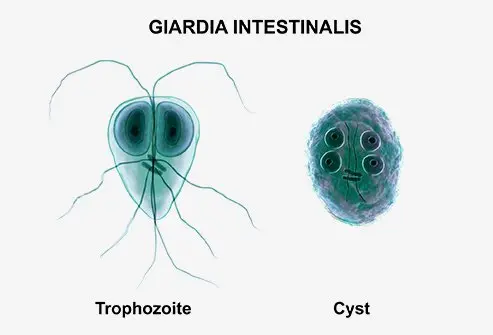
Image from emedicinehealth.com
If it is picked up by the next dog when they accidentally ingest it, it goes back to its feeding stage and can reproduce by dividing.
When there are enough of the trophozoites in the gut, they can show visible damage to the intestinal wall.
What to look out for?
What symptoms are typical for most dogs and what are we looking for?
There are a few things to watch out for to see if your dog has caught giardia.
- Typically sudden onset of very bad smelling diarrhea
- Sometimes weight loss
- Long lasting intermittent diarrhea
- Fatty stools, potentially with excess mucus
- Stools range from soft to watery, may have a green tinge, sometimes bloody
Some dogs may be less active but they tend not to have a temperature. Some dogs won't show any signs at all but can still leave infected stools.
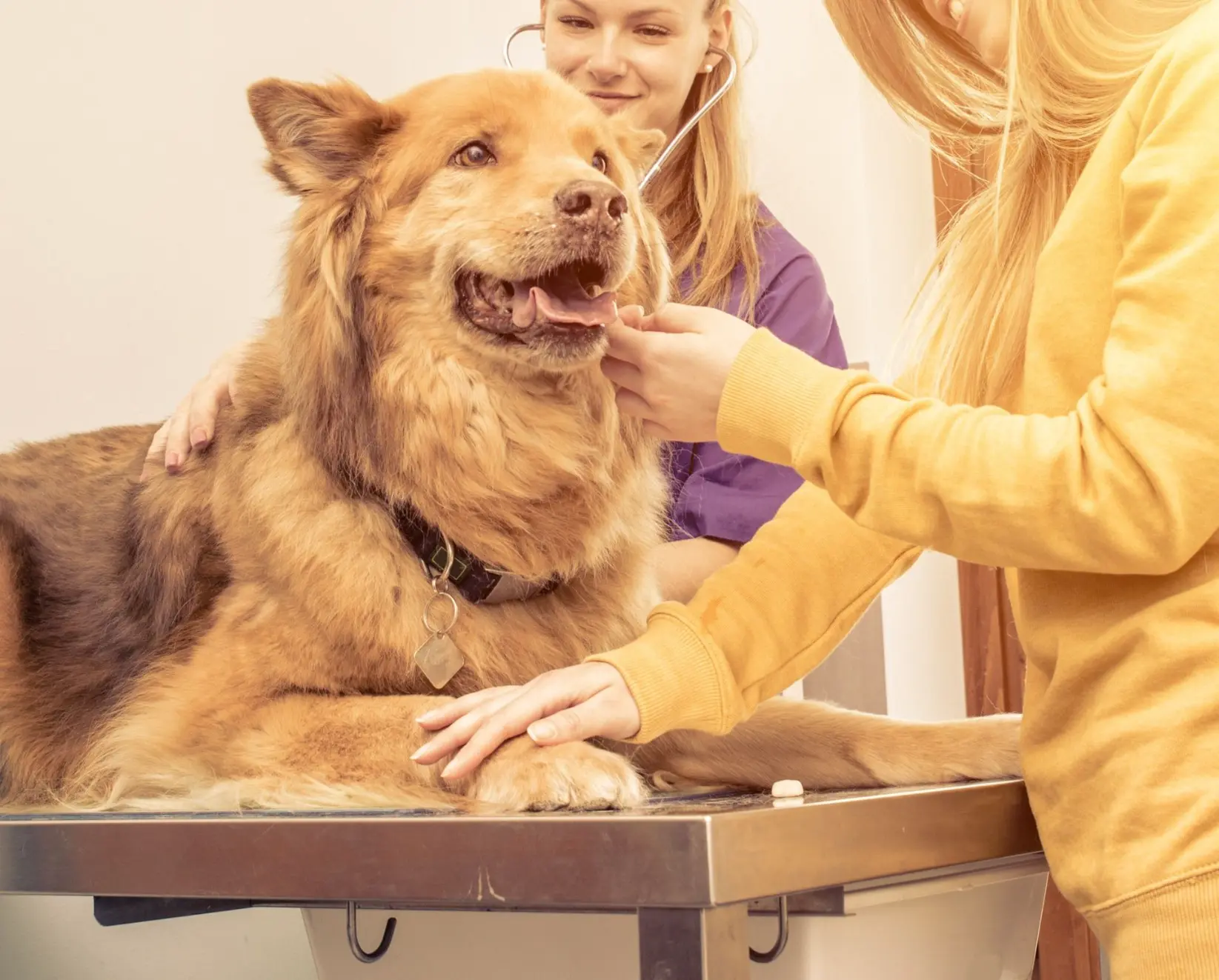
Given how prevalent infection is at the moment, if you see any of the above signs, please talk to your vet.
How to avoid it
We can minimise the risk when out and about by being aware of where it may be and cleaning up after our dogs.
Unlike many issues that our dogs can pick up from the environment, this one is not killed off by cold weather. To be rendered inert by cold, it needs to experience a prolonged period of under –13°C for a week or more, which is not very likely in Ireland.
Giardia thrives in wet and damp areas, so even if your dog has not directly eaten any stools, drinking from infected puddles can also pose a risk. In a damp or wet environment it can survive for several weeks or months. The best time for it to die off more quickly is in very dry weather with no recurring damp, where it die off in just under a week. Again, this poses difficulties for us here in Ireland.
The best rules of thumb to protect you, your dog and others are:
- Pick up your dog's stools immediately
- Bring water with you for walks
- Avoid wetter areas, sticking to higher, forested areas and paths
- Go to the vet as soon as any symptoms are visible